
Nation Sites
The Nation Network
WingsNation has no direct affiliation to the Detroit Red Wings, Ilitch Holdings, NHL, or NHLPA
Red Wings Show First Signs Of Culture Shift With Active Trade Deadline


By Nick Seguin
Mar 5, 2017, 15:26 ESTUpdated: Mar 7, 2017, 01:39 EST
The Red Wings have reached their crossroads. After twenty-five straight postseason appearances, the team is crumbling under the weight of their own mediocrity. Going into their bye week, the Wings were dead last in the Eastern Conference and about 9 points out of a wild card spot.
There’s nothing like being at the bottom of the standings to force you into a change.
In the above interview with the Fox Sports Detroit crew, Ken Holland speaks candidly and openly about his desire to collect picks at the trade deadline. It’s the first time in his career that he’s ever had to be a seller at this time of year and it marks a change in strategy and culture for the Red Wings.
There are three major pillars to the Red Wings team culture. First, they like to develop their talent through their own farm system, keeping a close eye on them and only bringing them up when they are ready. This can lead to some over ripening in the minors, but the team is always sure that their prospects are ready to handle the responsibilities that come with wearing the Winged Wheel. Second, they show a deep loyalty to these players. If the prospects buy into the system and show as much respect for the team as the team shows them, they will get paid well and for a very long time. Third, there is a great trust placed in veteran players and their ability to carry on the team’s winning culture. There should be a healthy dose of this on every team, but the Red Wings have always leaned heavily on their veterans, always carrying too many on the roster and giving them way too much ice time.
And it’s worked until the All-Star break this year. The Wings have had a “good enough” mindset, meaning they liked their team and felt they were competitive enough to still make the playoffs. But as the gap widened between them and the rest of the Atlantic Division, it became overwhelmingly clear that something had to be done and Holland acted swiftly.
It’s not something we were used to as fans. We’ve spent much of the last few years angry at him for being sterile and grounding the team in mediocrity. He handed out long term, expensive contracts to average players who were Red Wings draft picks and came up through the Red Wings system. The loyalty this team offered to its players was unlike any other in the National Hockey League.
The team never gave up on these players, even when they didn’t immediately pan out. Instead of trading them while they still held value, they’d be bounced back to Grand Rapids for further development. After a while, bouncing them back came with consequences as they had to go through waivers and many of them didn’t make it to the other side. Andrej Nestrasil and Landon Ferraro suffered this fate. The trend continued this season when the Wings lost Teemu Pulkinnen, Martin Frk (who was later re-claimed off the waivers) and, most recently, Alexey Marchenko. Don’t get me wrong – the Wings were not losing elite talent to the waiver wire, but the fact that these players were being claimed clearly meant other teams saw value in them.
Now, I don’t believe that Ken Holland didn’t at least try to move some of these players. My suspicion is that other GMs knew that he couldn’t afford to keep them on it. So they waited him out and, when he had no choice but to send the players down, snatched them off the waivers. The whole thing screams poor asset management on Holland’s part and an overcommitment to players who were scouted, drafted by, and being developed by the Detroit Red Wings organization.
Many believed that Tomas Jurco was destined to suffer this same fate. Practically banished to the press box this season, Jurco scored zero points in the sixteen games that he played since returning from offseason back surgery. He’s always been the odd man out on this roster, never having played a full season with the team. In the three seasons prior to this one, he played 44 games in 2015-16 (0.14 P/GP), 63 games in 2014-15 (0.28 P/GP), and 36 games in 2013-14 (0.41 P/GP). His declining production is a sign of his crushed confidence and an undefined role on the ice. The whole situation reeked of the waiver wire, as that’s how Holland has traditionally dealt with these situations.
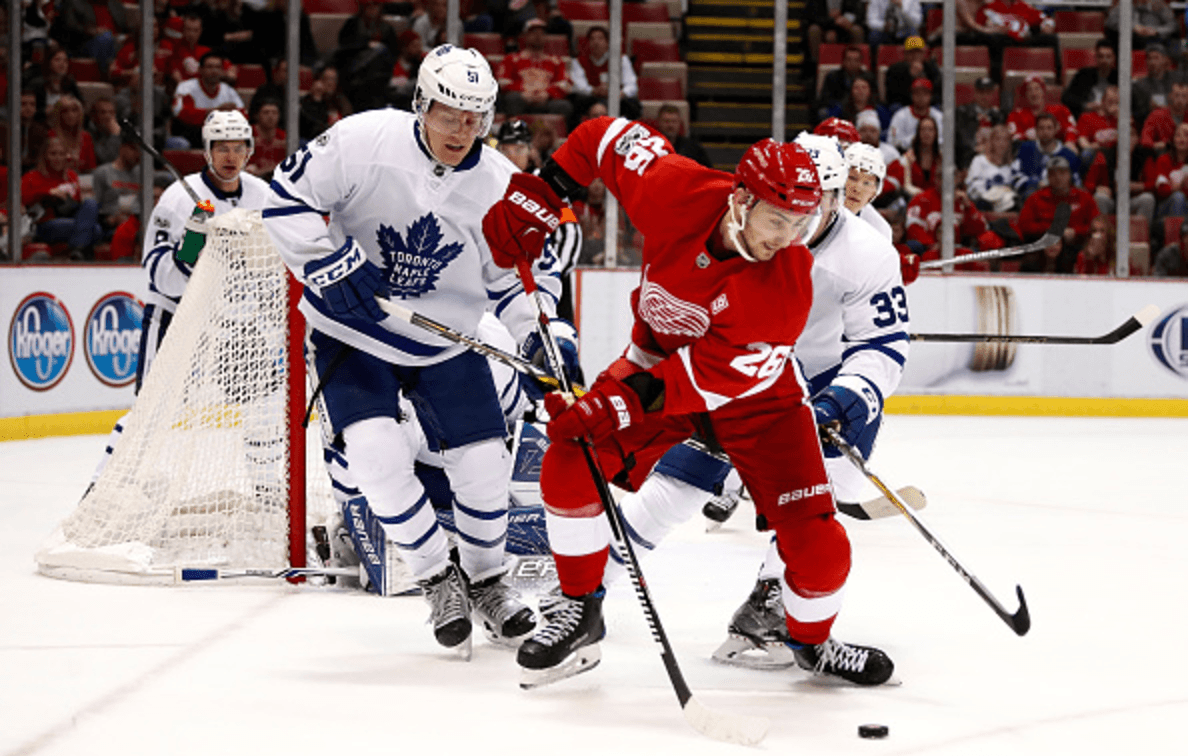
But then something happened. In the week leading up to the trade deadline Jurco was traded to the Chicago Blackhawks for a 3rd round draft pick in 2017. Holland didn’t take a player back in the trade, but instead collected an asset for the future. He didn’t lose Jurco for nothing to the waiver wire. He sold. For me, this was the first sign that the brass in Hockeytown knew that the status quo wouldn’t cut it anymore.
The trend continued a few days later when Brendan Smith was traded to the New York Rangers for a 3rd round pick in 2017 and a 2nd round pick in 2018. The Smith trade was different, though. It’s not like Smith wasn’t panning out as an NHL player. He was the Wings’ 1st round pick in 2007 and developed through the Red Wings system into arguably one of the best defensemen on the team. He is the perfect example of the type of player the Red Wings are traditionally loyal to. And yes, they did reportedly try to sign him to a contract extension (old habits die hard), but the fact that he was ultimately dealt for a couple of assets is another sign of a culture shift in Hockeytown. The “same old, same old” just isn’t cutting it anymore and management is starting to build for the team’s future instead of their chances now.
The other surprising thing about the Smith trade is that he was a six year veteran in the Winged Wheel. He would have had a short crossover with Niklas Lidstrom and has played with Pavel Datsyuk, Niklas Kronwall, and Henrik Zetterberg. Smith has been part of playoff runs for his entire career. His play is something the Wings know and, for the most part, are comfortable with.
//embed.gettyimages.com/embed/515907766?et=gSOraVzFTuBnzgAOPB5wiQ&viewMoreLink=off&sig=N3fzo9qfnR4BAUbY-MIvTkZ2YrXKoU793TbZgX0h7Vo=&caption=true
It’s been known for a while, but has been particularly painful this season, that this team hesitates to put too much responsibility and pressure on its young players. Nyquist and Tatar played in the AHL until they were 24 years old. This season, Anthony Mantha, the Red Wings current G/60 leader, started the season with the Grand Rapids Griffins. Andreas Athanasiou, the team’s leading P/60 player, struggles to get more ice time in a top-6 role. It’s a known trait of the Red Wings culture that they’ll stifle their youth in favour of playing the trusted veterans, which leads me to Thomas Vanek.
Vanek has been around the league for eleven years. He’s a proven goal scorer who knows what it takes to get into the playoffs. He quickly became the Wings’ best point producer this season and the team relied heavily on him for offense. Due to his UFA status at the end of the season and the bounceback season that he’s had, there was no way that they couldn’t not move him at the deadline. Still, by not receiving any NHL-ready players back in the trade, the Wings will need to rely more heavily on the next generation for offense.
With Zetterberg, Nielsen, and Abdelkader’s contracts, there will still be a strong veteran presence on this team for a long time, but the Vanek trade is a sign that Holland and co. are starting to see that if the young players on this team are to be successful, they need to be given a chance to carry the team. Of course this whole point becomes moot if Holland uses his free cap space to bring in another ageing player this offseason, but until that happens I am taking this as a sign of a culture change from relying on the old to trusting the new.
Holland may not want to use the word “rebuild”, but that is, in essence, what he is doing here, albeit on a small scale. Rebuilding is never something the Red Wings have had to do. Thanks to the culture that was cultivated in Hockeytown over a quarter-century of playoff appearances, this team has always been good enough to be buyers at the deadline. But after this disaster of a season, the seed has been planted that maybe this team isn’t good enough this year. And maybe it won’t be good enough next year either.
A rebuild is no easy feat. It’s hard on everybody involved: the coaches, the players, management, ownership and, of course, the fanbase. But with the Wings transition to Little Caesars Arena next season, it couldn’t come at a better time. A fresh start in a new home. It will require a new culture and fresh mindset. These three deadline moves are the first signs of the required culture shift to stay competitive in today’s NHL. The hardest part is still to come, but if the team can stay the course and commit to it, they may find that they can get to where they want to be much quicker than they originally thought.


Breaking News
- Handing out even more team awards to the 2021–22 Detroit Red Wings
- Three former Red Wings draft selections are set to hit free agency
- Report: Detroit Red Wings captain Dylan Larkin switches agents
- Why Detroit Red Wings defenceman Moritz Seider should win the Calder Trophy
- Cossa remains sharp as Oil Kings push Winnipeg to the brink in WHL playoffs

Detroit Red WingsTeam Cap Summary

Cap Summary
2026-27
2027-28
Projected Cap Hit
$84,427,916
$50,266,250
Projected Cap Space
$19,572,084
$63,233,750
Current Cap Space
$19,572,084
$63,233,750
Active Players
22/23
13/23
Draft Picks
Round
'26
'27
1
1
1
2
1
0
3
1
1